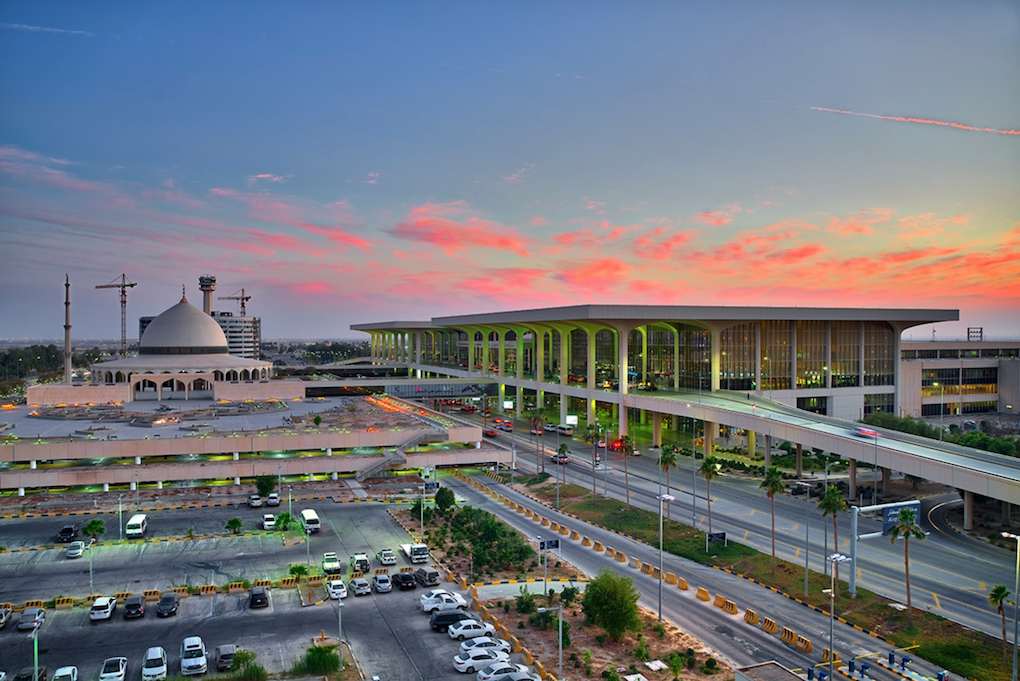

INDIA. In the latest of a series of articles about travel retail and aviation in India, long-time travel retail and aviation expert Shriram Sanjeevi assesses the challenges ahead for the stricken Indian aviation market, and in particular for the Airports Authority of India, in an industry faced with crippling financial difficulties in the face of the COVID-19 pandemic.
[Note: The views expressed in this column are not necessarily those of the Publisher].
On 25 May 2021, I was pleasantly surprised to see a post on LinkedIn from BIAL, the operator of the Bengaluru airport, celebrating its 13th anniversary. I couldn’t but feel nostalgic, for I played a significant role (yet a very insignificant one in the larger scheme of things!) in designing, setting up, leasing and later managing the first formal travel retail environment across any greenfield airport in India.
I joined as the 33rd employee of BIAL in May 2006. Little did I realise when I signed my offer letter what I was doing. A few days after joining, it dawned upon me that in India we spend at least three years building a simple flyover across the road, so how would an airport with a runway, terminal building, an ATC Tower and a large cargo hold be built in 36 months?

We actually did. And it was completed in less than 33 months. From there on, the story of privately-managed airports in India has become bigger and better in the past decade and a half with much more to come in this decade.
The new greenfield airport at Hyderabad in the neighbouring state of Andhra was inaugurated alongside Bangalore. The pre-existing (brownfield) airports at Mumbai and Delhi were handed over to private airport companies which have built world-class amenities respectively at these precincts since 2006.
Together, the four airports contribute around 60% of all air traffic in India (pre-pandemic numbers). Chennai and Kolkata Airports, amidst much chaos, have remained with Airports Authority of India (AAI), the nodal agency which monitors and manages all airports in India. At last count, there were over 120 operational airports in India, at least half of which have been commissioned in the past seven years of Modi-led BJP Government.
Needless to say, Indian aviation has taken wings and all four private airports have been winning awards and accolades for their performance and consistency.
Buoyed by the success of passenger amenities, world-class aviation facilities and cargo handling capabilities and also to reduce the operational strain on the Exchequer, in 2018 Narendra Modi’s cabinet approved the privatisation of a further dozen airports, mostly in the capitals or commercial centres of the top ten states in India.

For the less-informed, a different political party runs the central Government from each State or Union Territory (28+8 at last count) which has an altogether different cabinet. In the latter case, it may or may not be run by the same political party which functions at the centre, or one which chooses to align with the one at the centre.
So, it was unsurprising that the State Government of Kerala, a communist regime for well over five decades in the 74 years of independent India, now run by the Indian National Congress and the main opposition Party at the centre, approached the top court in India to nullify the award of the airport privatisation contract to its state capital, Thiruvananthapuram.
It objected on two counts. Firstly that the airport was being well managed by AAI, and secondly that the incumbent, Adani Group, had no experience in airport management [the group won six airport contracts together].
When the Government managed the airports until 2006, it was Indian Aviation 1.0 and when the private operators hopped in, it was 2.0. Now, it’s time for Indian Aviation 3.0.
That Mr. Gautam Adani’s business is an open supporter of the Indian Prime Minister’s Bharatiya Janata Party is well-known. The central Government held on its move until the General Election was completed in 2019 and once Mr. Modi was back in power, it completed the transfer of contract to the Adani Group with a formal approval by his Ministers of the Cabinet.
In the meanwhile, Adani Group played two masterstrokes – it acquired the stakes held by the GVK Group at MIAL, the company that runs Chhatrapati Shivaji Maharaj International Airport in Mumbai, and which is the major shareholder in the upcoming greenfield Navi Mumbai Airport project.
This has fuelled even more ammunition to raise against the ruling party that private airports are now getting monopolised, with Adani Group holding six key airports; the GMR Group managing Delhi and Hyderabad airports; and the rest with hitherto lesser-known players. BIAL is owned by Indian Canadian Prem Watsa-owned Fairfax Holdings and a consortium led by Zürich Airport Authority, which has recently won the greenfield airport opportunity for Delhi’s second airport at Noida.
A positive side-effect of the privatisation trend is that most airports run by AAI have upgraded their facilities, airside and landside. What most travellers see (and mainstream media reports in India) are landside infrastructure development, ease of ingress and egress to the airports, retail and F&B facilities and other passenger amenities such as the number of aerobridges.

What they don’t see or report, is that AAI has significantly upgraded the aviation and cargo-operation led services. Many airports across India are now CAT II and CAT III compliant, have installed Instrument Landing Services (ILS); have built multiple taxiways along the main runway; and are in the process of developing secondary runways (such as at MAA) to ensure faster turnaround of aircraft, without wasting precious fuel and time awaiting take-offs.
Since this is not something that is socially discussed, people are unaware. AAI has also invested in rebuilding or commissioning airports of tourism and strategic importance, such as the one at Gangtok, which was personally unveiled by the Prime Minister in the state of Sikkim, which has most parts of its land parcel located in the Eastern Himalayas. The location is also the closest to the Chinese-Tibetan border from India.
This and many such airports remain assets-owned and run by the AAI. Whereas the more commercial ones, with a higher air traffic and better non-aero revenues such as those at Guwahati and Mangalore, have been handed over to private airport operators.
In May 2021, a spat broke on the social media platform Twitter with Rahul Gandhi accusing the Modi government of “selling away airports to friendly corporates” under the garb of airport privatisation. The Aviation Minister Hardeep Singh Puri replied that the airports are only given on a lease model and therefore would remain national assets all the time.
Gandhi should know, perhaps. It was during the Congress regime in the centre between 2004-2014 that the privatisation of airports began. There were nationwide strikes across airports, with the local AAI unions refusing to part with their prized possessions to an outsider company. In fact, his mother Mrs. Sonia Gandhi inaugurated the airports at Delhi and Hyderabad, built by the GMR Group, whose close proximity to the party is well known. More on this in a separate post. Or maybe, Netflix will produce something more interesting than my writing!
Amidst all the Twitter spat between the supporters and sympathisers of both parties (mostly those who don’t understand commercial aviation), AAI announced more recently that it plans to exit its shareholding from the entities which own these private airports and rather quietly earn the concession revenue.
For the record, Delhi pays 49% of its revenues to AAI, Mumbai 36% and other airports between 15%-25%. This move, according to the Aviation Ministry, under whose purview is the AAI, will ensure they do not have to necessarily keep investing (according to their stake) on development and redevelopment of airport infrastructure, maintain a Board position and get involved in business strategy.
This looks logical, given that the Indian Government’s Public Sector Undertakings (PSUs) have largely remained locked up in their thoughts and execution, save for a few who have come out of that inertia.

Aviation is different, however. In 2010, we saw Zürich Airport diluting its stake to the GVK Group to run Bangalore Airport. A few years later, the Swiss company exited completely with a fine ROI on their initial stake made in 2004 when it entered India, inflation adjusted, of course.
So, for AAI to believe that their equity divestment is a great idea is naïve. In fact, having a residual stake coupled with the fact that the land is locked and on lease to the private operator, which would eventually plough back to the Government, is a much better deal.
Secondly, to depend only on the concession revenue is not just a risk that the AAI is taking, but also shapes as a blunder of sorts, purely from a “future-proofing its revenues” standpoint. For the record, AAI earned Rs. 3,600 Crores (US$493.4 million) during the FY 2019-20 on a turnover of 14,367 Crores (US$1.97 billion).
And in the previous year, it made Rs. 2,300 Crores (US$315.2 million) profit on an operating income of Rs. 13,087 Crores (US$1.79 billion). However, in FY 20-21, the numbers will be drastically lower. With domestic aviation at one point coming to a halt due to the COVID-19 pandemic, the airports have already incurred huge losses.
Present and future expansions have not only been put in abeyance, rather they have been completely shelved in some cases. The new private airport that was to come up in Chennai is a great example.
Being a large country spread geographically, over 80% of air traffic in India is domestic and just 15 airports manage almost 80% of all air traffic. While cargo is indeed an income generator for airports (and a notable non-aero revenue), it is not sufficient o run the operations of an airport of that scale. And thanks to well-maintained state and national highways across the length and breadth of the country, most of the domestic cargo – from fresh vegetables to newly-made passenger cars or commercial trucks – moves inland on wheels without any dependency on aviation.
On top of this, it is believed that a few private airports have decided to invoke the force majeure clause, which means that they would probably get the entire concession fee for FY 20-21 cancelled irrevocably. This may happen once again even in future in the coming one to two financial years due to the ongoing pandemic.

While it is only reasonable to allow a waiver of concession fee to the airports, it could be disastrous to the Exchequer. Further turbulent and uncertain times lie ahead and some fear a dangerous precedent, within and outside the aviation industry. Various global outlooks and rating agencies predict that it will take around four years for normality to return after the pandemic.
Within the confines of Indian aviation, it will take at least 18-24 months for airports to get back to pre-pandemic levels of air traffic [probably longer for international traffic -Ed]. That means, the new greenfield airports and the brownfield private takeovers, the new runways and terminal buildings which are being built, are likely to experience a dearth of passengers.
Given this case, is it logical for the AAI to exit its shareholding and depend only on the concession fee from airport operators?
The Indian Aviation Ministry has given a reprieve to airlines, allowing them to increase their base rates for air fares. This means the working capital for the airlines could increase marginally over the next few months. But the real multiplier effect benefit would occur only when passenger numbers significantly improve. Today, those who are flying are those who mainly those do not have another option, either on a business or personal front.
With most Indian corporates settling into a semi or a complete work-from-home model, work-related travel has been reduced to a minimum. Being a habit-forming activity, companies are realising they are saving precious dollars with their staff not travelling at all and still getting most of their work done – without air travel. This is not going to change in the near future. So a direct impact on aero-revenues and therefore a significant “concession fee” seems to be a distant dream for AAI to fill its coffers for the next few years.
With regards to non-aero revenues, airports do make significant incomes from retail and F&B concessions on the landside and airside. But the price of even basic food, coffee and tea has gone up significantly at most private airports, hurting consumer sentiments, over the years. Passengers regularly complain on social media and through redress forums that the offering in many cases are comparable or even more expensive than the most pricey equivalents at downtown restaurants, hotels and malls.
Another factor is that during the pandemic, many of those people who have flown have refrained from consuming F&B at airports, preferring to bring their own sustenance or simply not consuming at all. With COVID protocols in place, both airports and passengers wish that they do not hang around at the airport beyond their stipulated wait times. Thus, the precious “dwell time” to earn dollars which the F&B concessionaires depend so much on is massively reduced.

Landside development, that is unlocking real estate for commercial development, has always been a contentious issue at Indian airports, both for those managed by AAI as well as private operators. To begin with, it’s an unwanted security risk, allowing thousands to visit or pass through the most secure precincts of an airport. Second, the winning bidders mostly do not have the necessary experience or expertise and have messed up commercial development in similar examples such as at a few Metro Rail locations across India. Third, it takes years to plan and build landside development; so, there is no immediate reprieve to AAI from such a move as well.
So what will AAI actually earn, purely from concession revenues, from non-aero sources?
Perhaps AAI still has an opportunity to rethink its decision to exit the equity shareholdings. Rather, support the airport operators with faster approvals for landside development, multi-modal connectivity and of course, by offering precious “doles” to airports, airlines and flyers.
The Aviation Ministry must seriously consider a downward revision of the UDF and PSF – User Development Fee and Passenger Service Fee – which is charged by airports to passengers. This charge is mostly for the upkeep and maintenance of the facilities. While there is no doubt that the private airports are well maintained, they are fewer in number.
The majority, over 110 airports in India, are run by AAI. By reducing this fee, it could motivate more people to fly, especially from Tier 2 towns, thereby increasing the flight frequencies and occupancies which will in turn have a ripple effect on the entire ecosystem. More passengers at airports is sweet news for concessionaires to help their businesses back into shape.
A two-year moratorium or even a complete waiver on concession fees from private airports is another important point to moot. This will encourage existing private players to continue investing in airport infrastructure upgrades and will set a path for more private investors to look at Indian aviation, especially airport development and management, as a huge opportunity for the next 20 years. With at least 300 operational airports, the country could probably be among the top aviation markets in the world. Wishful thinking, but why not?
There are bigger concerns amid the pandemic, of which aviation is the worst-impacted globally. AAI has a larger role to play, by ensuring the airports and airlines have a better and level playing field when compared to globally-competitive aviation markets. It’s not the shareholding and the immediate asset monetisation – AAI has earned Rs. 20,000 Crores (US$2.74 billion) from various private airports in the past 15 years – that the organisation should focus on rather than just simply waiting to earn concession revenues.
To depend only on concession revenue is a bigger risk for the PSU (for there is no clarity on when a huge turnaround either in India or globally), especially since international carriers bring significant load into the country.
When the Government managed the airports until 2006, it was Indian Aviation 1.0. When the private operators entered the fray, it was 2.0. Now, it’s time for Indian Aviation 3.0.
Interesting, yet very testing times ahead for the industry. All I can hope for, is that good sense prevails and there is a long-term outlook, rather than measures just to allay short-term fears. Time will tell.