

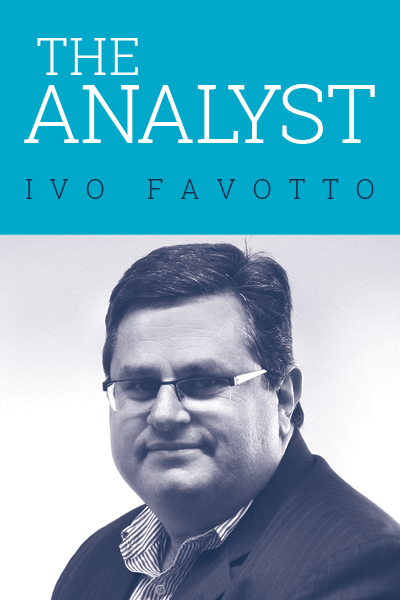
The industry reaction to The Analyst’s last article – Is Force Majeure the next must have clause in travel retail concession agreements? – was impressive, with tens of thousands of reads via this site and LinkedIn and many comments. It certainly appears to have struck a nerve with travel retailer and with brands/suppliers to travel retail. But the bigger question that it has raised is: What’s in it for airports? Ivo Favotto, a Sydney-based executive and company owner who has worked for all three stakeholders in the Trinity chain, discusses the issue from the airport’s viewpoint, with the help of insight from a specialist airport concession lawyer. [Please note: The views expressed within this article are not necessarily those of the publisher. In several instances we disagree but it is important that we air a variety of perspectives on the subject.]
It takes – as they say – two to tango. While the case for a force majeure clause in concession agreements is obvious for concessionaires, it is far more nuanced for airports.
The argument goes that a force majeure clause redistributes some of the risk from the concessionaire to the airport. While prima facie that may be true, the reality of the current COVID-19 crisis is that airports have not been able to avoid the impact of the crisis. When a crisis is so big that it threatens the solvency of concessionaires, airports have no choice but to share the risk and unfortunately, the pain.
Nevertheless, the lack of a force majeure clause in concession agreements puts airports in the driver’s seat in any negotiation during a crisis. Concessionaires have to go to airports to request relief and go through an (often protracted) negotiation to get some relief.
And while the insolvency risk of the current situation puts strong pressure on airports to do something, the very process of having to negotiate without a force majeure clause means that concessionaires may end up bearing more of the risk (and in this case cost) than airports. We have seen this in the current crisis with some airports proposing rent deferrals rather than waivers or only offering half MAG waivers.
The Moodie Davitt Report’s Trinity Initiative attempts to envision a future contract structure post COVID-19. But this initiative – like all previous attempts and there have been quite a few – is being led by concessionaires and brands/suppliers [that is simply untrue, it is a truly tri-lateral initiative that is very much involving the airport perspective; quite how the writer has jumped to that conclusion is bemusing – Martin Moodie, Chairman, The Moodie Davitt Report]. The cacophony of support for the Trinity Initiative is directly related to the size of the crisis.
The bigger the crisis, the louder calls for reform to airport travel retail concession agreements. And these calls have extended well beyond calls for a force majeure clause. There are calls for even more radical change to the whole model, including Minimum Annual Guarantees (MAGs).
The possibilities
So if any material change in travel retail concession agreements is going to happen, we need to answer the question – what’s in it for airports? There are a range of possibilities.
First, is the blunt sledgehammer response that there is nothing in it for airports – they have no choice. No responsible travel retailer will ever again sign a concession agreement without a force majeure clause. Travel retailers could – in a sort of tacit collusion – all decide that they will do this. But history suggests this probably will not hold.
After all, existing travel retail agreements without force majeure clauses were signed by concessionaires willingly. No-one was holding a gun to their head. Travel retailers accepted this risk – probably in the belief that the risk was very small. And so it is – we don’t have global economy destroying viruses every day.
The risk seems big now because we are living such an event. But really, in the history of travel retail, global survival risking events have been rare. Sure we’ve had little crises along the way (boy GFC, SARS, MERS etc seemed big at the time) but in reality, these little crises were not solvency destroying in the way COVID-19 is. Just as recently as November 2019 (only six months ago), the risk seemed so small that just about every travel retailer was willing to sign a concession agreement without a force majeure clause.

How long would it be before an airport says “you can win this concession if you sign up to this agreement without a force majeure clause?” And how long before someone accepts the risk once (if) COVID-19 is in the rear-view mirror? After all, it will likely be someone else’s problem down the track.
The second possible answer to the question ‘what’s in it for airports?’ is at the other end of the spectrum, requiring airports to take a more altruistic or long view. They might take the view that a healthy and competitive travel retail industry is good for airports in the long run. The more competition there is in the travel retail sector, the better the outcome of future tenders and leasing campaigns will be. Under this view, no travel retailer should go to the wall due to COVID-19 and airports should act reasonably with or without a force majeure clause and waive rents when stores are closed or when sales are materially impaired.
The longer this crisis goes on, the greater the insolvency risk for travel retailers and the more likely it is that there will be further industry consolidation. However, this approach requires an airport to suffer short term pain (i.e. less rent than they would otherwise get by enforcing MAGs) in order to get a long term gain (or at least be no worse off). Not every airport will make this choice voluntarily – although some already have.
A sub-set of this argument is that given the rapidly changing environment (i.e. traffic reductions, terminal closures/amalgamations, social distancing requirements, pre-flight health testing etc) some airports might prefer more flexible arrangements than the traditional 5-7 year concession agreements so that they can react more flexibly and quickly. While this may be true in the short term, it is unlikely to be true in the longer term once a “new normal” has been established.
Airports are capital intensive, long term assets. Concession agreements with MAGs provide airports and financiers with some certainty that allows them to make major capex investments with confidence. By contrast, the capex investments made by travel retailers – even if they are important and significant for the operators – are relatively small.
The historical (and still current) role of MAGs was to hold bidders for a concession accountable for the sustainability and accuracy of their bids.
The current concession model is not the way it is now by accident. It reflects the underlying economics of the situation – highly capital intensive airports needing some certainty in revenue streams to commit large volumes of cash to capacity improvements and in typical times, multiple travel retailers bidding for each concession. The historical (and still current) role of MAGs was to hold bidders for a concession accountable for the sustainability and accuracy of their bids.
After all, how else would an airport know if a retailer’s business plan is realistic? While airports are not naive, passive participants, neither are they retailers.Without a MAG, over-bidding may be rife, creating even more issues for airports. And after all, the current concession model has withstood the test of time, including multiple crises and multiple attempts by the travel retail industry to change the model.
A different kind of crisis
But this crisis is different, I hear you cry. Bigger, badder and more widespread than any before. So big and so bad that airlines and travel retailers will fall over, then consolidate and then force airports to change the model. Quite possibly true. But that’s what we would always say when we are smack bang in the middle of a crisis, isn’t it?
But there is a third possible way to answer the question of ‘what’s in it for airports?’. To find the answer, The Analyst spoke to specialist airport concession lawyer Warren Davis, Managing Partner of Ovartis Lawyers.
“In short – certainty and control – that’s what’s in it for airports considering their contractual, commercial and corporate social responsibility obligations,” said Davis.
According to Davis, just as airports need certainty during business-as-usual times to underpin significant capital investments, COVID-19 has highlighted that they need certainty in force majeure times too. “Their board governance requirements will demand it, especially now, as will their sophisticated investor base,” said Davis.
He continues: “Airports need to maintain control over the contractual consequences of a force majeure event, but they also need to limit their exposure where they are potentially exposed to statutory obligations to pay compensation where business disturbance occurs and to common law obligations for quiet enjoyment.”

So how do airports achieve that certainty and control where a force majeure event occurs?
According to Davis, it’s by including a force majeure clause in an airport concession lease that’s certain enough to establish the process and an agreed set of force majeure principles from which agreement can hopefully be reached, but broad enough that the airport is not unnecessarily giving up rights that might be unsuitable for the force majeure event at hand.
Davis went on to say: “It would be all too easy to draft to the specifics of COVID-19. But that would be dangerous as some other force majeure event (e.g. COVID-22, a total internet failure, or whatever) could be far less or far more impactful on an airport concession lease.
“Certainty, in force majeure terms there needs to be a broad certainty. Too narrow or too prescriptive, and the force majeure clause may be rendered useless or of little value to the airport.”
What about control? Davis said: “Airports must maintain control over the process and possible contractual outcomes when a force majeure event arises. It wants to control what the tenant must prove to trigger the negotiation process, especially as not all tenants will be affected by a force majeure event in the same way.
“It also wants to control the possible outcomes, setting some boundaries around the maximum relief it may give. This is especially important, as the standard common law position in a commercial lease is that rent is payable in all but a small handful of circumstances, even if a force majeure event occurs.”
So how do airports achieve broad certainty and flexible control in any possible force majeure clause they might consider?
“That will depend on each airport’s position on this issue and where they fall on the spectrum of possible response – blunt sledgehammer response or more altruistic or long view). Wherever an airport falls on the – ‘what’s in it for airports?’ – question, I would lean towards a simpler, less prescriptive drafting approach,” said Davis.
Key elements to force majeure clauses
There are four key elements in Davis’ recommended approach to force majeure clauses in concession agreements that will provide the incentive for airports to agree to their inclusion.
First, such force majeure clauses need to be detailed and prescriptive on the information requirements of the tenants, especially as each tenant will be affected to different extents by a force majeure event.
Second, force majeure clauses need to be clear on the process, ensuring there are regular reviews and information requirements to ensure the concession lease gets back to a normal footing as quickly as possible – there’s a difference between being affected (not usually covered by a force majeure clause) and not able to fulfil the key terms of a lease (usually a key requirement to trigger a force majeure clause).
Third, Davis recommends not being too prescriptive on outcomes, such as rent reductions or suspensions, as the outcome ought to follow the prevailing circumstances of the force majeure event, and the airport ought to have a large say in that during the negotiations. Airports could consider absolute fall-back positions, such as requiring the tenant to pay turnover rent and outgoings as a condition to the relief package. They could also consider giving the airport the ability to terminate the lease after a specified period if the force majeure event continues without giving that right to the tenant.
Fourth, Davis would also suggest taking a narrower approach to the definition of force majeure than you would typically see in a supply chain contract. He explained: “A force majeure clause is a discretionary contractual clause, so borrowing from the usual clauses in other contractual environments would not be helpful in a lease context. For instance, it may be perfectly acceptable for the parties to a supply of widgets contract to allow labour strikes as a force majeure clause.”
He added: “But I would suggest that risk should continue to lie with tenants as is the case absent a lease force majeure clause. Most importantly, consider limiting the force majeure definition to emergency response and statutory compliance events only, such as what we are currently experiencing with COVID-19, and exclude the more usual acts of God, such as cyclones, drought, bush fires, and the like – those events ought to continue to be covered by the damage and destruction clauses almost always seen in an airport concession lease.”
And, as always with a good lawyer, comes the caveat: “Notwithstanding the above, airports will need to navigate the applicable local or national retail leases legislation and common laws that might apply to them, and airports will need to carefully manage their risk and compliance position when seeking to achieve a negotiated outcome with their concession tenants.”
So in summary, what is in it for airports? With careful drafting of force majeure clauses, it appears that the travel retail Trinity can walk and chew gum at the same time.
Airports can achieve control and certainty over situations such as COVID-19 where control and certainty has proved hard to achieve.
And retailers and concessionaires can have some comfort around the rules governing a game-changing event such as COVID-19.
There is no need to throw the baby out with the bath water and redefine the airport concession model including MAGs. It is questionable in any event whether a complete reimagining and redistribution of risk between the parties will ever hold, taking into consideration the need of both parties and the underlying economics.
Airports need certainty of revenues to underpin the massive capital investments they have to make. At the same time, retailers cannot bear all of the risk for major disruptions such as COVID-19. Force majeure clauses will likely emerge as the “third way”, offering a path where each party may not get 100% of what they want but at least there is some control, certainty and comfort for all parties.
Note: The Moodie Davitt Report welcomes your feedback on this article and on the whole subject of how concession contracts should be structured in the future. You can add your comments (anonymous if preferred) via the DISQUS platform below or by writing in confidence to Martin@MoodieDavittReport.com
*About Ivo Favotto
Ivo Favotto has a long and distinguished record in the airport and travel retail sectors. A trained economist, he entered the airports/infrastructure sector with Australia’s Federal Airports Corporation in 1992 as GM – Planning & Economics.
He later built a highly successful international airports/infrastructure consulting practice, working with three firms – Bach Consulting, Arthur Andersen and URS Corp – and advising many of the world’s leading airports, governments and investors in the areas of retail planning, master planning and privatisation/transaction support.
In 1998 he established the market-leading Airport Retail Study, selling it to Moodie International so he could join The Nuance Group (now owned by Dufry) as Executive Vice President – Strategy & Business Development in Zürich. He later returned to his native Australia as Director – Sydney Airport before being named Executive General Manager of Duty Free & Luxury, Pacific for Lagardère Travel Retail.
 Favotto has now formed The Mercurius Group, a Sydney-based consultancy focused on industry research, consultancy and benchmarking studies.
Contact: Tel: +61 423 564 057; E-mail: ifavotto@themercuriusgroup.com; Website: www.themercuriusgroup.com