



LATIN AMERICA. Two leading economists have outlined the dramatic impact that the COVID-19 pandemic is likely to have on the Latin American economy.
Speaking during a webinar organised by Asociación Sudamericana de Tiendas Libres (ASUTIL), BNP Paribas Head of Economics Brazil Tatiana Pinheiro predicted that gross domestic product (GDP) in the region would contract by -7.8% in 2020 compared to 2019.
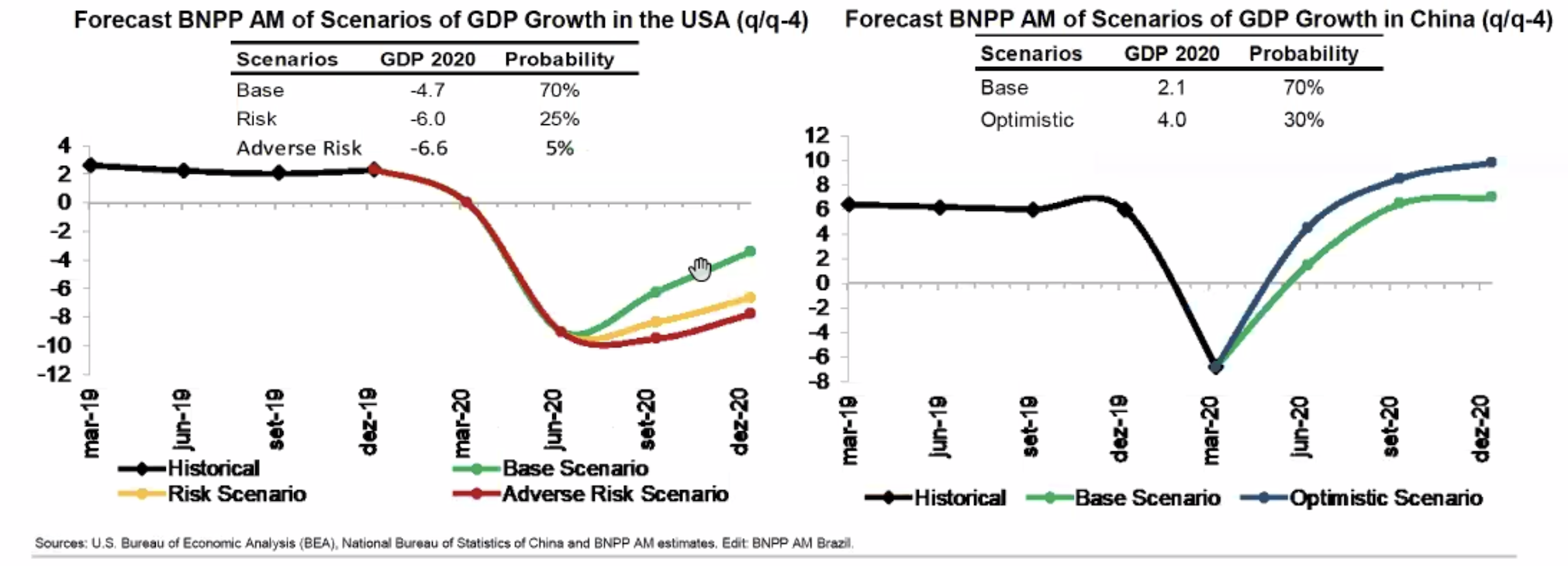
She said: “China will probably have a V-shaped recovery from the coronavirus; we saw the Chinese economy fall very sharply in February, but the economy was almost back to growth in April.
“This will not be the case for Europe, the US or Latin America, which will all need more than two months to start seeing positive growth. The impact of COVID-19 will be long-lasting for the Latin American economy; it will not be V-shaped.”
There will be some growth in the Latin American economy in 2021, Pinheiro said, but it will not be enough to offset the contraction anticipated in 2020.
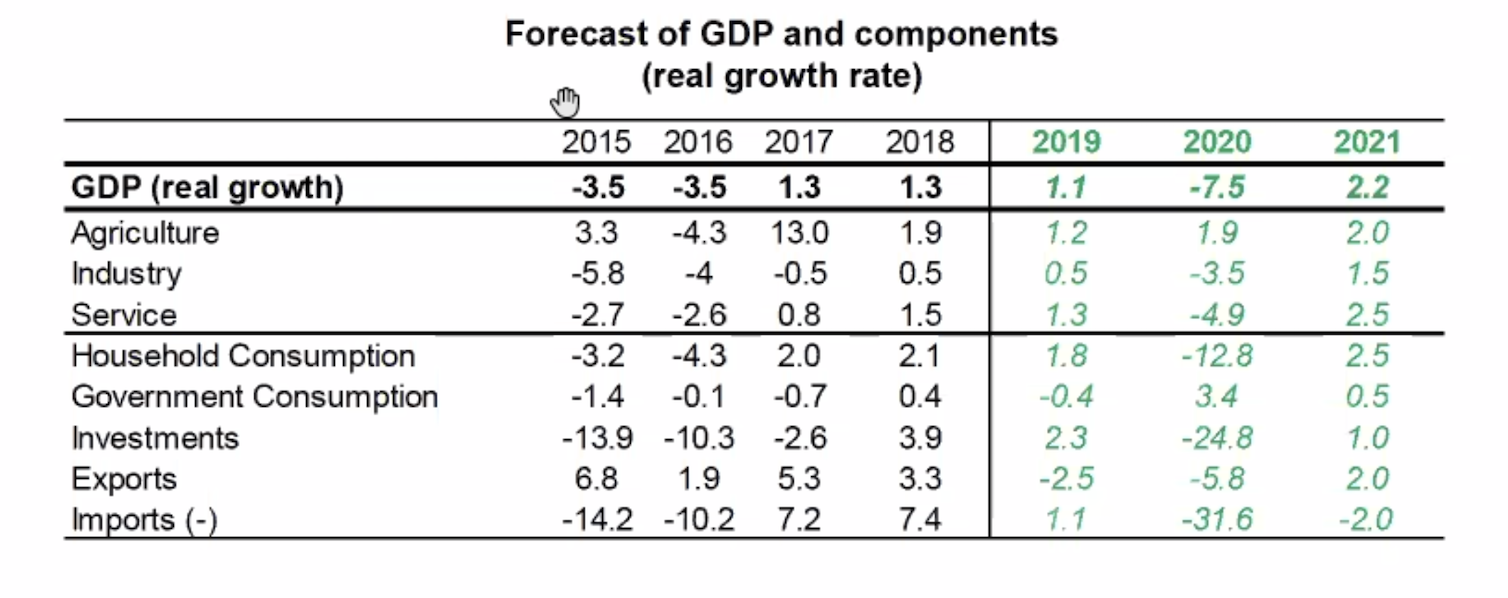
Focusing on Brazil, Pinheiro continued: “We are doing very badly because we did not [introduce] social distancing enough to contain the disease, but enough was done to produce a collapse of economic activity.”
She added that Brazil’s currency performance is highly volatile, affecting consumer price perceptions of the country’s duty free sector. “The exchange rate in Brazil is what we would call high beta,” Pinheiro explained. “This means the currency rate variation is bigger than its peers. When the international environment is good, the appreciation of the Real is higher than other economies; once markets are in a bad mood, the depreciation of the Brazilian Real is bigger than other economies.”
Attendees of the webinar also heard from Carlos Melconian, who served as President of Argentina’s national bank from 2015-2017.
“Argentina decreed an extreme quarantine, which killed the economy. So far, Argentina has undertaken one of the most severe lockdowns in the world. That means the economic situation has deteriorated markedly,” Melconian said.

He predicted that the COVID-19-induced recession in Argentina would be deeper than those the country experienced in the late 1980s and early 2000s.
“That means my forecast in advance is the recovery will be very difficult and different to previous experiences,” Melconian added.
Despite the gloomy outlook for the Latin American economy, ASUTIL President Gustavo Fagundes emphasised the travel retail industry’s resilience in the face of past economic crises.
“Our industry is showing resistance and has been resilient for a long time, and I am sure it will keep on this track,” he said.