Starboard Group President & CEO Lisa Bauer tells Dermot Davitt about the major dynamics driving cruise retail growth today, while the company also makes its first foray into land-based vacation retailing.
The multi-layered story of Starboard, one of the pioneers of Americas travel retail since 1958, began a new chapter recently. The company – best known for its cruise retail expertise – officially opened its first land-based resort stores in partnership with Westgate Resorts in Las Vegas in late 2025.
The entry into the wider vacation retail space followed the creation last year of Starboard Group’s new corporate structure across three business units – Starboard Cruise, Starboard Luxury and Starboard Resort.
Starboard Resort, says the company, is building on its parent company’s rich history to elevate retailing at luxury, family, spa, ski, beach and other resorts and vacation properties.
Amid this expansion, the core of the business remains in the Starboard Cruise division, which manages retail on more than 90 ships across 15 cruise line partners, with expanded ecommerce capabilities and other products. Starboard Cruise recently secured the onboard retail contract for Royal Caribbean International’s third Icon Class ship, Icon III, slated to launch in 2026.
Assessing the consumer landscape for cruise in 2025, Starboard Group President & CEO Lisa Bauer says that the biggest drivers of shopper interest and spend will be personalisation, exclusivity and experience-driven retail.
She notes: “Today’s cruise guests are looking for more than just products – they want stories, connections and unique discoveries that feel curated just for them. The rise of experiential retail, digital engagement and sustainability is reshaping how guests interact with shopping.
“A key dynamic in the cruise retail space is that shopping is no longer a standalone activity – it’s deeply intertwined with the overall guest experience. Retail is a touchpoint for destination discovery, cultural immersion and even self-expression. Additionally, the demand for luxury, limited-edition and locally inspired products continues to grow, with guests seeking items they can’t easily find elsewhere.”
Maintaining relevance as shopper demands change quickly is a challenge facing all retailers – the response in cruise retail is all about agility, data and story-telling, says Bauer.
“We stay ahead by leveraging guest insights, social listening and retail trends to curate collections and experiences that resonate in real time.
“Our approach is built on three pillars: guest-centric curated offerings, where we design retail concepts that align with evolving expectations, from exclusive destination-inspired collections to immersive pop-ups; tech-enabled personalisation, leveraging AI and digital tools to tailor shopping experiences and make every guest feel like a VIP; and experiential evolution, transforming retail into entertainment with interactive moments like tequila tastings and personalised workshops.
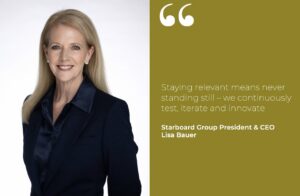
“Staying relevant means never standing still – we continuously test, iterate and innovate to exceed guest expectations.”
Keeping the offer fresh and dynamic means nurturing strong brand relationships – not always easy when some brands remain unaware or unconvinced about the value of the channel.
Setting out the clear case for brand investment in cruise, Bauer explains: “Cruise retail is one of the most untapped and high-potential channels in luxury and experiential retail today, offering access to affluent, globally minded guests who are uniquely primed to shop in a relaxed, celebratory mindset.
“Many brands still hold misperceptions about cruise – often because they’ve never even set foot on a ship. Our biggest initiative is getting them onboard, because seeing is believing. And lesson number one? It’s a ship, not a boat!
“Once brands experience it firsthand, they immediately recognise the scale, sophistication and opportunity cruise retail presents. With a captive, highly engaged audience, a growing global footprint and a high-touch environment where trained brand ambassadors and immersive storytelling elevate shopping beyond transactions, cruise retail is a rare and valuable opportunity for brands seeking to connect with luxury consumers in a differentiated, high-impact way.”
Among the biggest themes facing retail is how the channel is embedded in the wider guest experience onboard – ensuring it is viewed as relevant in the same way that food or entertainment are.
For Starboard, retail should be “a natural extension of the cruise journey – an experience, not just a transaction”, according to Bauer.
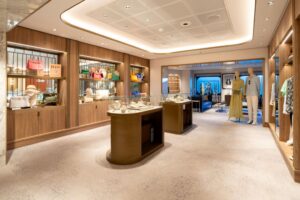
That means integration with onboard programming, so guests can shop custom glassware after a mixology class or purchase unique items tied to their experiences.
“Retail can also bring destinations to life through curated collections and local artisan showcases, while technology-driven touchpoints like virtual try-ons and interactive displays enhance engagement and convenience,” Bauer notes.
“We work closely with our cruise partners on new-builds to influence retail spaces from the start, ensuring they are designed to fit seamlessly into the guest experience.
“Additionally, during dry docks, we focus on integrating retail into the ship’s flow and programming, making shopping an organic and exciting part of the journey. Cruise lines play a key role in elevating retail by investing in innovative formats that align shopping with entertainment, transforming it into an essential and memorable part of the guest experience.”
With that level of integration in mind, we ask, what does a win/win cruise line partnership look like to Starboard today?
“A true win/win partnership goes beyond traditional revenue models to create a shared vision for guest engagement,” says Bauer. “The best partnerships prioritise guest-centric innovation, ensuring the experience comes first, with financial success following naturally.
“They embrace flexible, experience-driven retail, moving beyond static storefronts to dynamic activations that drive participation and spending. A commitment to shared investment in growth, from technology to brand collaborations, fosters innovation that benefits the entire ecosystem.

“Finally, aligned financial incentives ensure success is measured beyond traditional sales-per-guest metrics, incorporating experiential upsells and digital commerce for a holistic revenue strategy. The strongest partnerships break the mould, delivering something new, exciting and truly differentiated for guests.”
Bauer highlights how some current Starboard projects embody how the retailer would like the partnership to work – and they stand as examples of innovation in the channel.
This year, Starboard launched Venus Fashion’s first retail presence at sea, bringing a well-loved brand to a new audience. The company says it is also transforming beauty shopping with SkInsight, its AI-powered skin analysis tool, offering guests a personalised, tech-driven approach to skincare. The initiative was also winner of Best Use of AI in The Moodies digital and social media awards for 2024.
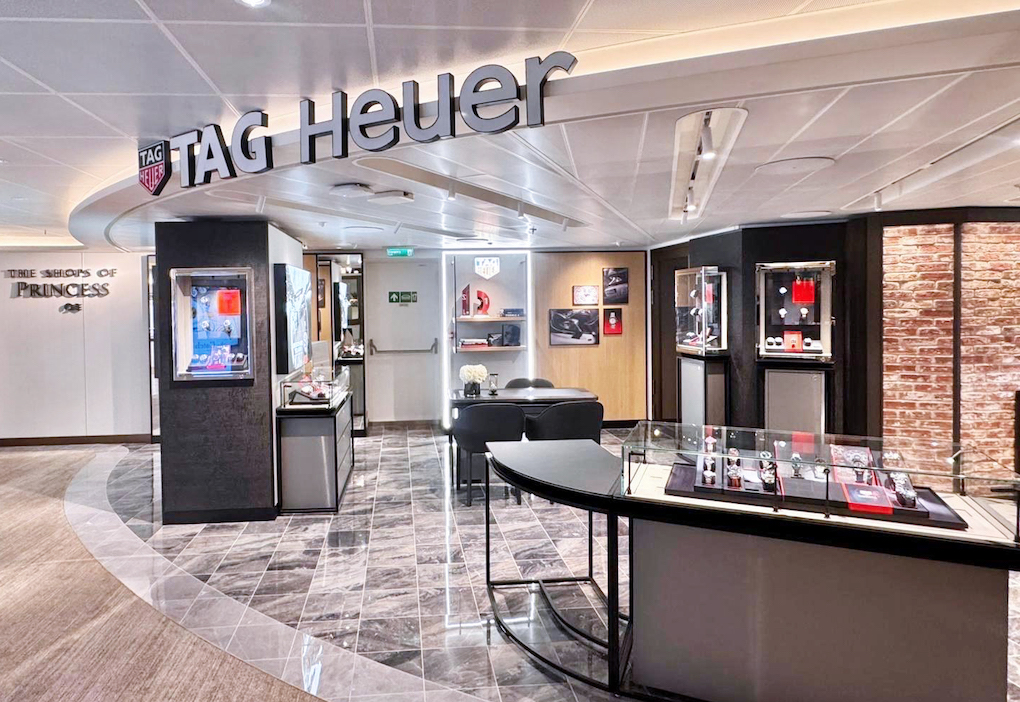
Other examples Bauer cites include the new Swiss timepiece space featuring Breitling, Hublot, Omega and Tag Heuer onboard Oasis of the Seas – and the Bvlgari boutique onboard Ritz-Carlton Yacht Collection’s newest yacht, Ilma.
She also highlights the Las Vegas land-based stores noted above, which help introduce Starboard’s expertise to new markets.
“Each of these projects reflects our commitment to experiential, destination-inspired retail – seamlessly blending storytelling, innovation and commerce to create unforgettable shopping moments,” concludes Bauer.
*Starboard Group has committed its support to the retail sessions at Seatrade Cruise Global 2026 as a Platinum Partner. The Retail Days – a series of conference sessions dedicated to retail at sea – take place at Miami Beach Convention Center on 14-15 April, co-organised by The Moodie Davitt Report. Seatrade Cruise Global is the premier annual gathering of the cruise industry worldwide and runs from 13-16 April. Click here for more. 🛳️