

AMERICAS. Leading travel retail executives from across the Americas have painted an improving picture for the recovery of the airport and border shop retail sector as air travel restrictions ease. Their comments came during a webinar staged on Thursday by the International Association of Airport Duty Free Stores (IAADFS).
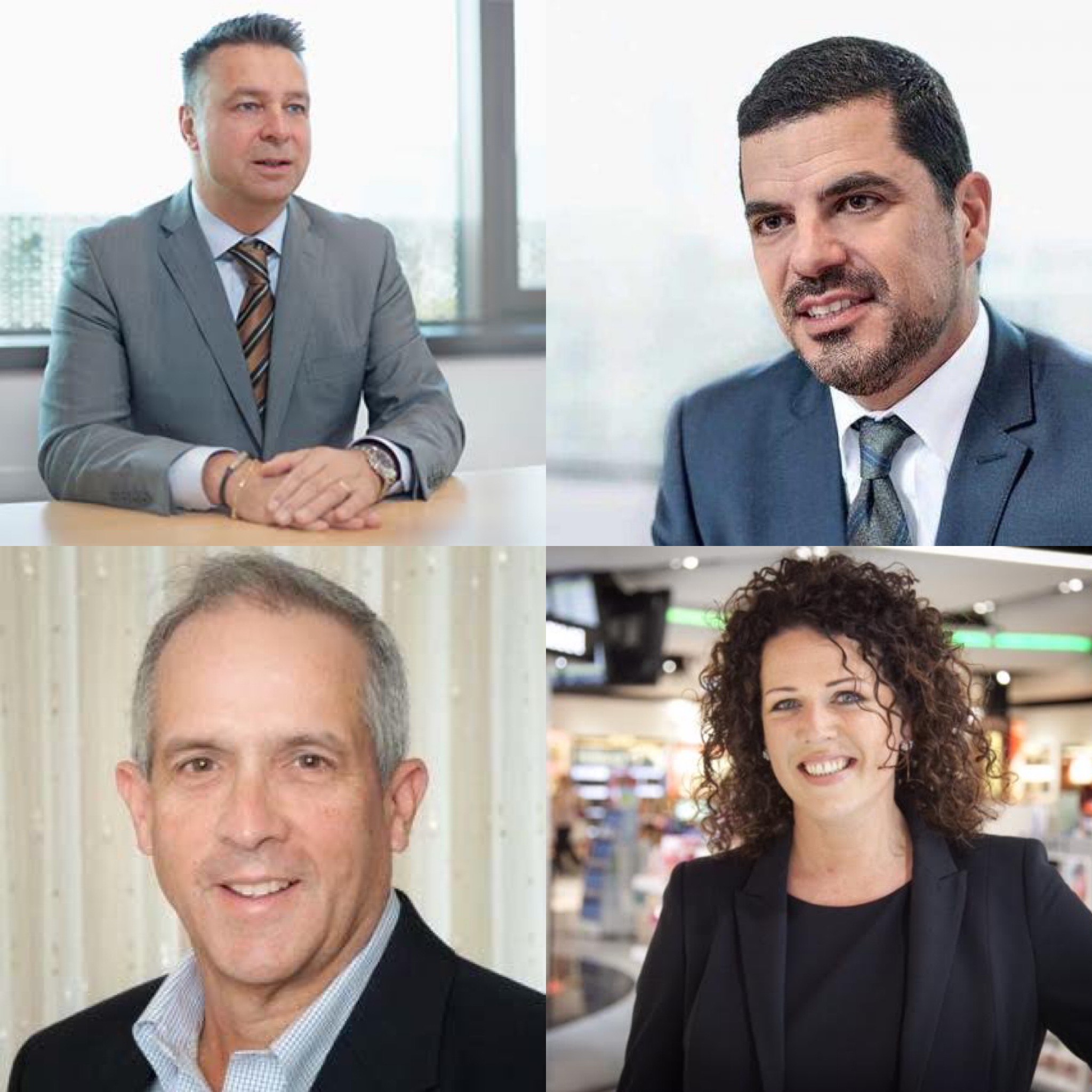
The webinar, titled Progress, and Where We Go From Here, was moderated by Dufry Central and Latin America Executive Advisor at Dufry America and IAADFS Chairman Rene Riedi. He was joined in the discussion by a panel that consisted of Hudson CEO Jordi Martin-Consuegra, Aer Rianta International General Manager and Director North America Jackie McDonagh and Motta Internacional CEO Erasmo Orillac.
“Performance is looking good. The spend per passenger, the average ticket is looking good. We’ve all done the homework. We’ve all done everything we need to do to position ourselves for the future” – Hudson CEO Jordi Martin-Consuegra
Martin-Consuegra, who reported that 90% of Hudson stores have now reopened in North America, said his company has done “a lot of living on the edge” but is now thriving with air traffic levels up to about -25% of 2019 levels. “We’ve been able to improve our own numbers on average even a little bit more than that,” he said.
He added: “We opened quickly and early to be there as soon as the traffic flow appeared and that has given us a good foundation to take advantage of the rebound.
“Things have changed a lot since early Spring. And they continue to change very quickly, particularly after the latest announcements and measures that have been taken in Canada and in the US to open for international travel.”
Martin-Consuegra said he doesn’t foresee a return of Chinese and wider Asia passengers in any great numbers until the second half of 2022, and described the return of business travel as a “grey area” in the short to medium term. However, he added that he is personally optimistic about the long-term picture for business travel.
Asked about changes in consumer behaviour, Martin-Consuegra noted the rise of “one click shopping” and airport shoppers expecting “more speed and less hassle”. “It is going to be necessary for all of us to adapt to this,” he said.
He said the perceived changes in behaviour have given Hudson “a mandate to innovate faster and live up to that expectation”.
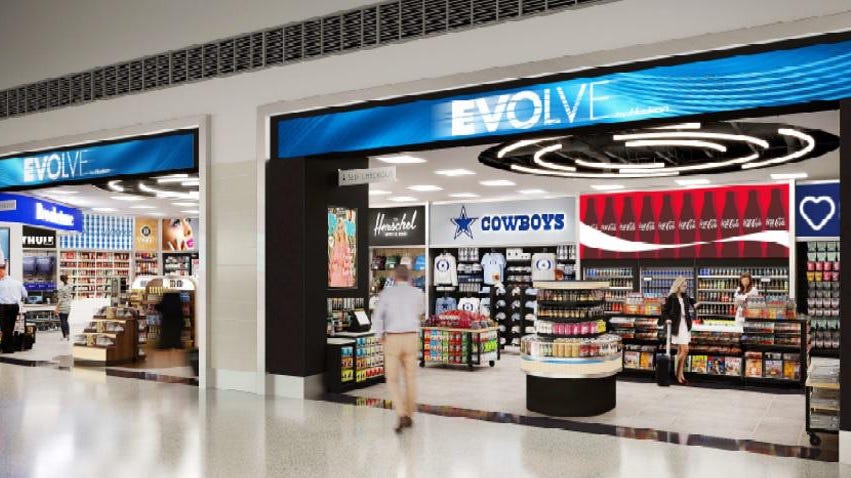
Martin-Consuegra pointed towards several moves by his company in this direction with the opening of contactless Hudson Nonstop stores, the development of Hudson’s new generation shop-in-shop store concept Evolve, and a refreshed look and offer for the portfolio of Brookstone stores that the company operates in US airports.
Asked about his future confidence in travel retail, he said: “We are bullish. Travellers are back and they want to fly as soon as we let them. As soon as we remove the constraints, the unclear regulations and improve vaccination rates, most people are ready and willing to travel.
“And not only that, they are ready and willing to shop. Shopping experience is still very attractive, even considering all the things that have changed the world.”
“I think international travel for Canada is probably not going to come back really until the summer of 2022. But we should see some form of normality in 2023 and then from 2024 it’s onwards and upwards. I see a strong future for the travel retail industry” – Aer Rianta International General Manager and Director North America Jackie McDonagh
He concluded: “We’re going to recover relatively fast in terms of travel volumes within the next couple of years. Performance is looking good. The spend per passenger, the average ticket is looking good. We’ve all done the homework. We’ve all done everything we need to do to position ourselves for the future.”
Focusing on Aer Rianta International’s business in Canada, Jackie McDonagh discussed the manifold difficulties that have been faced by the travel retailer in the country.
Strict travel restrictions implemented by the Canadian government have impeded the progress of any recovery, she said, pointing to the extended requirement for 14-day quarantines, even after negative COVID-19 PCR tests.
McDonagh observed that those requirements have now finally eased for international air travel, with Canada reopening borders for vaccinated tourists from most countries on 7 September. The next boost, she noted, will be provided by the US border with Canada reopening to drivers from 24 November.
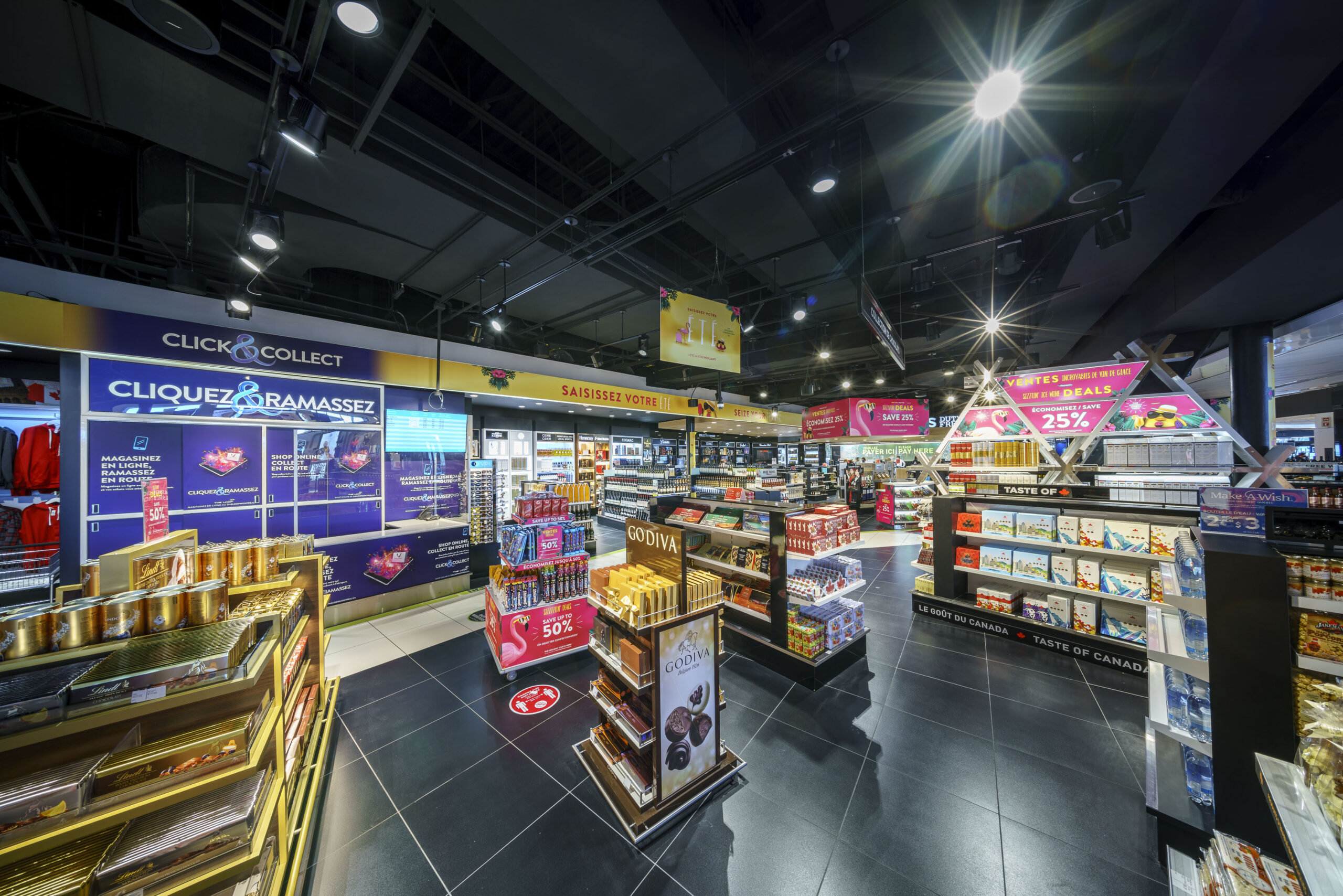
On the return of Canadian travel retail business, she said: “There is some growth coming. It’s a slow road and not rising significantly but it is not going to go backwards again, as it did earlier this year.”
Asked where ARI North America had been concentrating its efforts given the lack of recent business activity in Canada, McDonagh said the focus has been on training for staff and in-store customer service.
She said: “We’ve focused a lot on customer service training and looking at efficiencies in terms of what people expect when they come to the airport. It can be quite stressful as a passenger now because of the different layers of COVID-19 protocols that we need to follow.
“We are trying to make sure that customers are at the heart and the centre of everything that we do, whether it be new products, new promotions, and introducing new brands. We just took the time to really look for a customer-centric approach.”
“I think we need to negotiate contracts better and walk away from airports that insist on not having this type of process or having the type of parameters that could be discussed in the case that something like this happens again” – Motta Internacional CEO Erasmo Orillac
McDonagh pointed to two types of shoppers that have emerged during the course of the pandemic. “The one that is excited to be flying and wants to have an airport shopping experience; and those who are interested in online efficiencies, they want to get in and out of the shop quickly. So we’ve got to support those customers too.”
She noted that ARI North America has also launched a new online platform featuring 6,000 products for potential customers, as part of its focus on digital and catering for the new type of shopper. “We took that opportunity to really roll this out, so we will be ready for a comeback,” McDonagh said.
McDonagh noted that one of the main challenges currently being faced concerns staff recruitment, not helped by generous Canadian government furlough and social security payments since the onset of the COVID-19 crisis. “We had to make some [staff] cuts and we’ve had people that were on layoff and then decided they didn’t want to come back. There is currently a huge shortage of staff here in Canada, it’s very hard to recruit.”
To underline the difficulties, McDonagh gave the example of Montreal Airport, where nearly all food & beverage outlets are currently closed due to staff shortages.
Finishing on an optimistic note, McDonagh said: “I think international travel for Canada is probably not going to come back really until the summer of 2022. But we should see some form of normality in 2023 and then from 2024 it’s onwards and upwards. I see a strong future for the travel retail industry.”
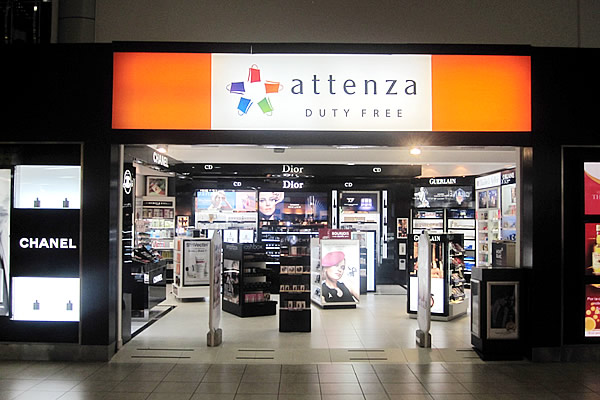
Motta Internacional CEO Erasmo Orillac reported a mixed picture for his company’s 40-plus airport and border Attenza Duty Free shops across Colombia, Ecuador, El Salvador, Nicaragua and its home territory of Panama.
Asked to describe what had been the biggest challenges of the COVID-19 period, he pointed to the negotiations with health authorities on how many people can be in-store at one time. On this, he said: “I think we have been able to get to a good medium point.”
He also referred to issues with inventory, with over-supply the issue at the start of the pandemic, but now, he said, as passengers return, Motta faces the opposite problem. “It is a challenge every day,” he said.
But the biggest issue though, according to Orillac, has been the discussions on contracts between airport landlords and the retailer. He said that some airports had been more understanding than others in negotiations over reducing payments in respect to minimum annual guarantees (MAGs) in the face of the collapse in passenger traffic.
He said, generally speaking, independent third parties should be used to arbitrate on deciding a “fair and proper rate”.
He hit out at the airports that have refused to come to the table to negotiate over MAGs, and also suggested that where possible contracts should be lengthened to account for the steep passenger loss which has halted growth.
Justifying this, Orillac said: “Air traffic was growing annually between 6-8% in Latin American but [because of COVID-19] we are three or four years behind with the line of growth now. It will probably be 2027 when we will have the passengers that we were expecting for 2024.”

He continued: “So those things have to be negotiated with airports because depending on your model you need a certain number of passengers, so you [therefore] need a contract extension. My best recommendation is that you now go with an independent third party to make a fair assessment of the [contract] situation.
“Of course, airports depend on the revenues of duty free stores, but we need to have clauses that account for these type of [COVID-19] events in the future. That will go back to what you do when passengers are down or you don’t pay if you are closed, or you pay a minimum rent. Minimum rent guarantees, I think is something that we’ll have to look to get away from and go more percentage based.
“I think we need to negotiate contracts better and walk away from airports that insist on not having this type of process or having the type of parameters that could be discussed in the case that something like this happens again.
“The airports give a public service for their country, we are a service to the public – it is different and I see there’s a very important line there.”
It was also announced during the webinar that the Summit of the Americas trade event will return in physical form next year. It will be staged from 10 to 13 April at the Palm Beach Convention Center. Read our separate story about this here.