



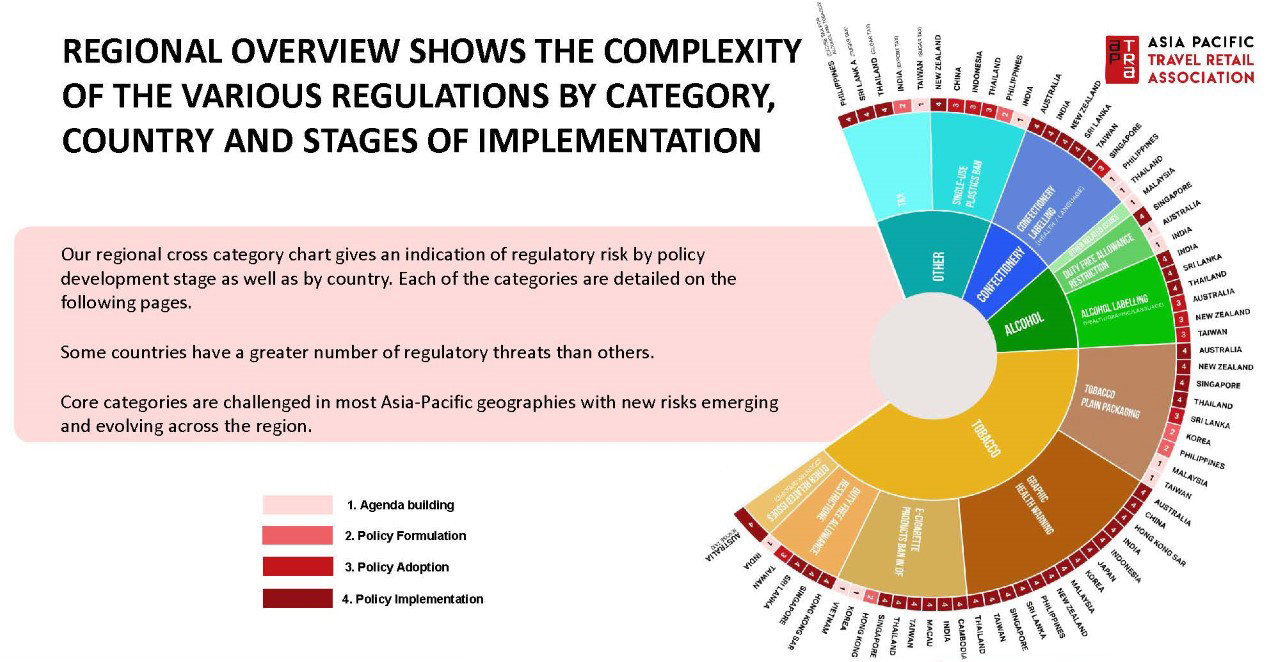
ASIA PACIFIC. The Asia Pacific Travel Retail Association today launched a new member-exclusive commercial tool – the APTRA Advocacy Report & Heat Map. The first in a new quarterly series of advocacy updates, it highlights regulatory and legislative challenges spanning the region.

The first report includes a summary of significant issues that have dominated the past 18 months.
A detailed assessment of each category outlines the current status on specific threats, from the initial stages of agenda building through policy formation, adoption and implementation.
Tobacco and sugar are among the subjects highlighted in the first report.
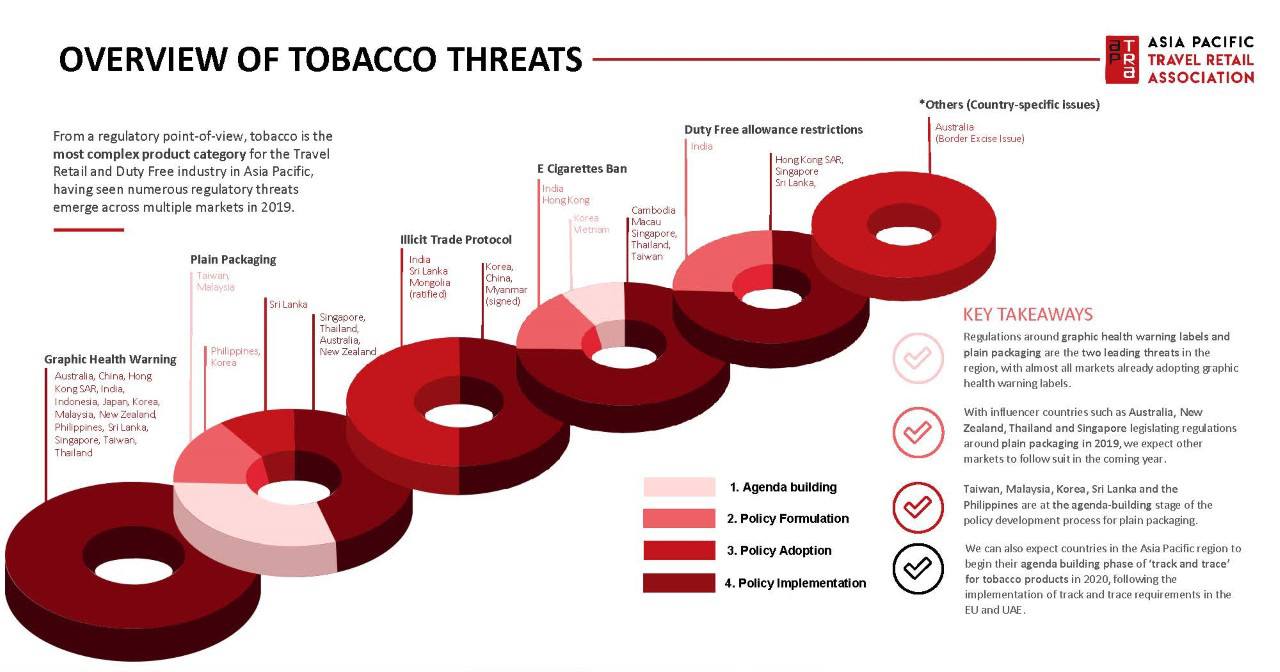
APTRA said that despite the World Health Organization’s recent postponement of its investigation into illicit trade and tobacco control, more immediate threats in tobacco include the implementation of plain packaging measures and stricter graphic health warnings, across many countries.
The report also looks at the “war on sugar” across Asia Pacific, where several countries including Singapore are currently formulating domestic regulation in specific drinks categories due for implementation over the coming 18 months.
President of APTRA Sunil Tuli said: “Despite the COVID-19 crisis we must remain alert to regulatory change, because policy development and government decision-making on regulatory issues in core categories is still very much active.
“Asia Pacific is a vast and complex geography of over 40 countries, with a highly diverse political landscape. Regulatory change moves at different rates and it is not always predictable. We cannot afford to take our eye off the ball.
“A key objective of APTRA’s mission is to nurture and help protect travel retail from changes in legislation. There are two pillars to our advocacy strategy. Firstly, with the launch of this new report we have done the legwork for members, giving them a valuable tool with insight on what’s coming down the pipeline in specific countries and categories.
“Secondly, we are actively engaged with governments to ensure the industry has a voice and that policy-makers understand the critical economic contribution of travel retail to the region, providing a direct GDP contribution of US$7.6 billion and 140,000 jobs.”
With many emerging legislative trends designed to address domestic health issues, APTRA said it is determined to ensure decision-makers in government understand that travel retail should be segregated from domestic health policy regulations, as goods are typically purchased by travellers and those leaving the country.
The association also made the observation that many policy-makers do not understand the “essential contribution” of travel retail sales to the financial health of airports and the vital role of the industry in the economic development of countries and the region as a whole.
APTRA said it aims to be a value-added partner to governments as they frame regulations and policies to ensure they make appropriate allowances for unique aspects of the travel retail market.