


ASIA PACIFIC/MIDDLE EAST. Air passenger traffic in Asia Pacific grew moderately by 2% year-on-year in March, while there was a slight decline of 0.3% in the Middle East.
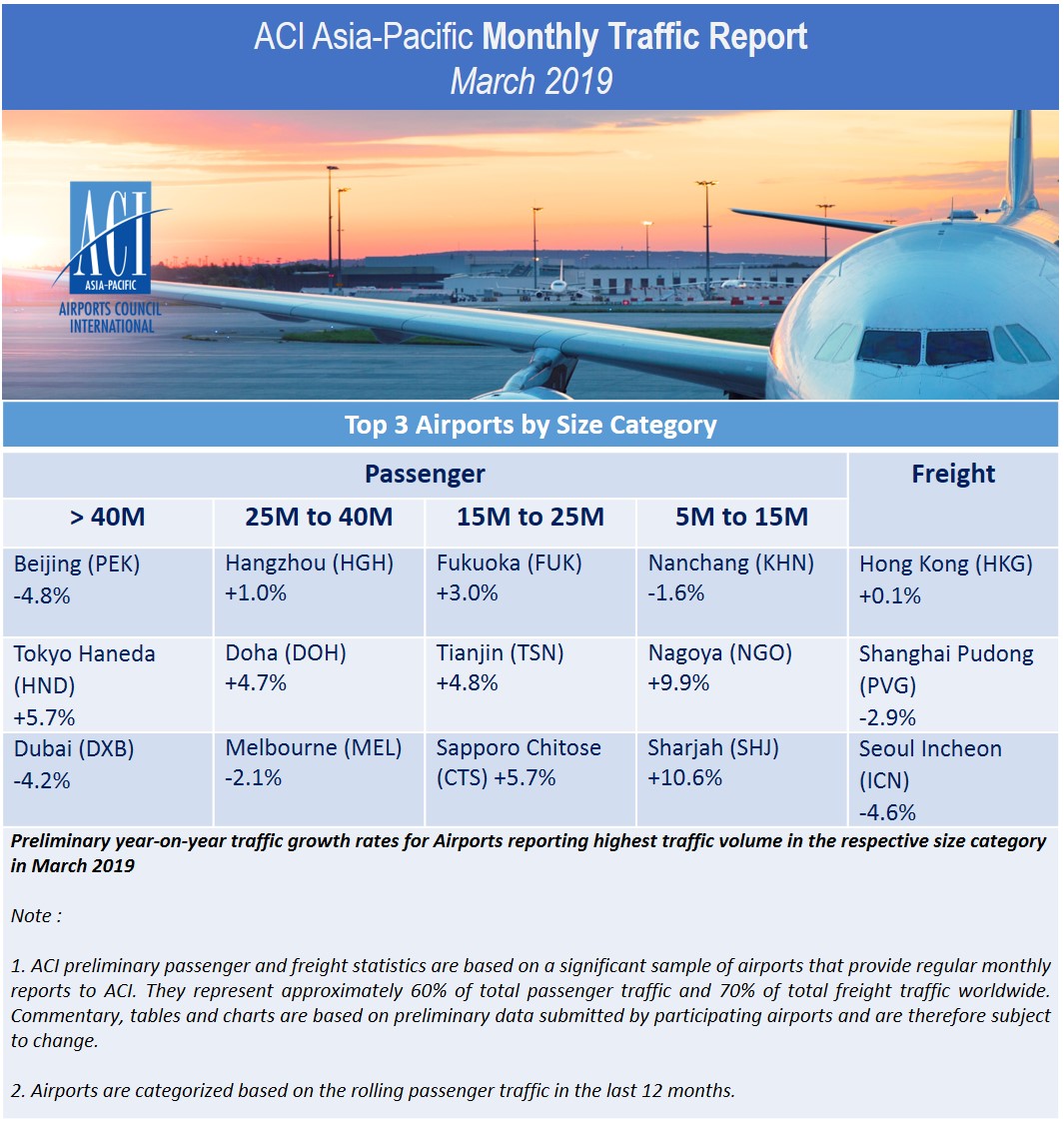
Airports Council International (ACI) noted passenger traffic growth of 1.1% in China, reflecting slower domestic demands. The three airports with the biggest volume increases were Guangzhou (4.5%), Nanjing (4.3%) and Tianjin (+4.8%).

India also experienced a slower pace of growth in both the domestic and international sectors, ACI noted. Overall passenger traffic declined 2.7% from last year, negatively affected by the partial runway closure at Mumbai and the “increasing magnitude of flight cancellations of a major airline”. Mixed results were observed among major airports in the country: Delhi and Mumbai declined 9.4%, and 16.3% respectively, while Bangalore and Calcutta saw growth of 11.5% and 2.3% respectively.
Japan and Korea were two bright spots, ACI said, with many airports benefiting from a surge in tourism during the cherry blossom season, generating solid positive growth. Tokyo Haneda, Osaka Kansai, and Seoul Incheon grew 5.7%, 6.2% and 3.8% respectively.
In the Middle East, traffic at Dubai International declined 4.2% as the later timing of the Easter holidays resulted in lower demand for air travel. A number of airports in the region reported positive results: Doha (4.7%), Muscat (8.3%), and Sharjah (10.6%).
Overall year-to-date passenger traffic in Asia Pacific and the Middle East grew by 3.4% and 1.1% respectively, ACI said. The pace of growth decelerated in major markets such as China, India and the United Arab Emirates.
“Growing geopolitical tensions, softening of the global economy and the grounding of Boeing 737 MAX were a few factors that affected the passenger traffic in both regions and will continue to pose uncertainties going forward,” ACI noted.